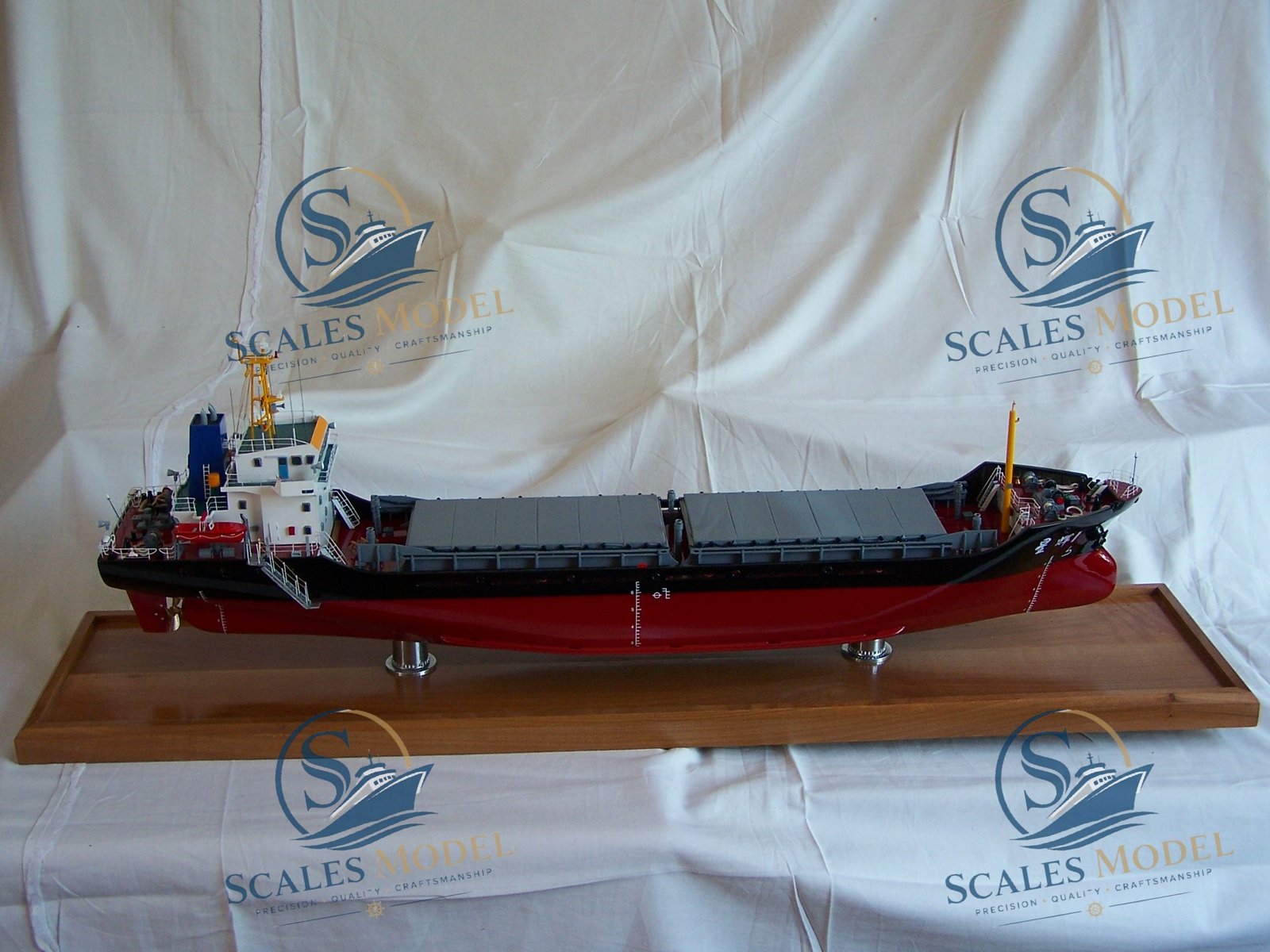
Creating a custom ship model is a fascinating blend of engineering, craftsmanship, and artistry. Whether it’s a commercial cargo vessel, luxury yacht, offshore platform, or historic sailing ship, every model begins with a vision and ends as a museum-quality display piece that accurately represents the original vessel.
En Modelo a escala, we specialize in building premium custom ship models for shipowners, shipyards, marine engineering companies, museums, and collectors around the world. Here’s a closer look at how a custom ship model is made—from the first drawing to the finished display.
What Is a Custom Ship Model?
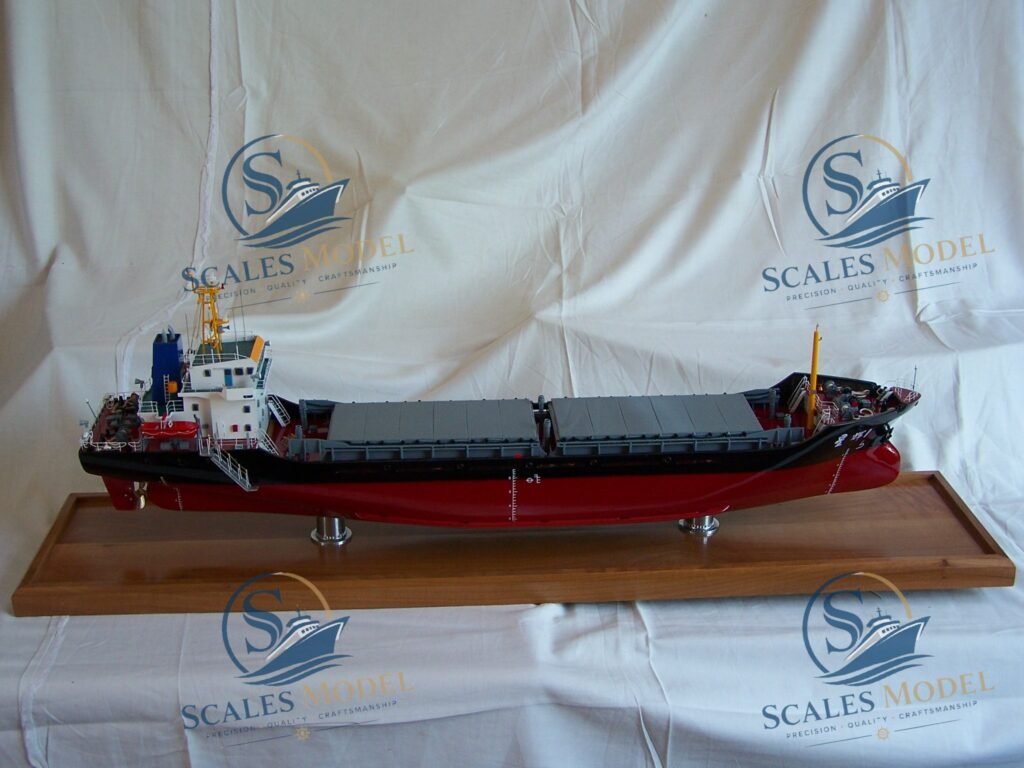
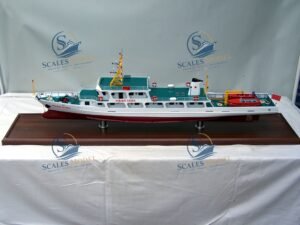
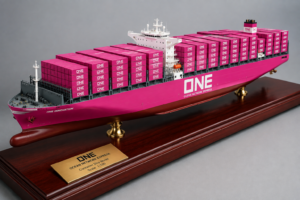
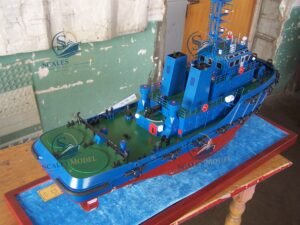
A custom ship model is a handcrafted scale replica built specifically to match an actual vessel. Unlike mass-produced models, each custom project is designed according to the customer’s requirements, ensuring the highest level of accuracy in dimensions, colors, structural details, and finishing.
Custom ship models are widely used for:
- Corporate office displays
- Shipyard presentations
- Vessel launch ceremonies
- Marine exhibitions
- Museos
- Educational institutions
- Private collections
- Executive gifts
Every model is unique, reflecting the identity and engineering excellence of the original vessel.
Information Needed to Start a Project
Every successful project begins with accurate reference materials. The more information available, the more detailed and precise the final model will be.
Common reference materials include:
- General Arrangement (GA) drawings
- CAD or 3D design files
- Hull line plans
- Deck layouts
- Side elevation drawings
- High-resolution photographs
- Ship specifications
- Paint color references
- Company logos and markings
If complete technical drawings are unavailable, experienced model makers can often recreate a highly accurate model using photographs and publicly available vessel information.
Elegir la escala adecuada
Selecting the proper scale is one of the most important decisions during the planning stage. The scale determines the model’s overall size, level of detail, and display requirements.
Popular scales include:
- 1:50 – Large display models with exceptional detail
- 1:100 – Ideal for exhibitions and corporate offices
- 1:200 – A popular balance between size and detail
- 1:300 – Common for commercial ships and offshore platforms
- 1:500 – Suitable for large vessels when display space is limited
The ideal scale depends on the vessel’s dimensions, available display space, and intended purpose.
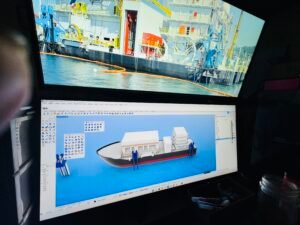
CAD & Engineering Design
Once the project specifications are confirmed, the engineering team reviews all drawings and prepares a production plan.
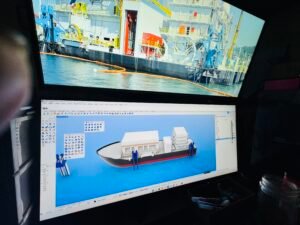
Modern ship model manufacturers use CAD software to verify dimensions, simplify complex structures, and ensure every component fits perfectly before production begins.
During this stage, engineers determine:
- Hull dimensions
- Structural components
- Deck layouts
- Equipment placement
- Lighting requirements
- Display base design
This planning phase minimizes errors and ensures the finished model accurately represents the original vessel.
Material Selection
Different projects require different materials depending on the desired appearance, durability, and level of detail.
Common materials include:
- Hardwood for hull construction and display bases
- Resin for intricate structures and equipment
- Brass and stainless steel for railings, masts, and fine details
- Acrylic for protective display cases
- High-quality plastics for precision components
- 3D-printed parts for complex shapes
Combining traditional materials with modern manufacturing technology allows for both durability and exceptional realism.
Handcrafting the Hull
The hull forms the foundation of every custom ship model. Skilled craftsmen carefully shape and assemble the hull according to engineering drawings and scale dimensions.
Each surface is sanded, aligned, and inspected multiple times before moving to the next stage. Even minor inaccuracies can affect the overall appearance, making precision essential throughout the process.
Building the Superstructure
Once the hull is complete, attention turns to the superstructure.
This includes:
- Navigation bridge
- Accommodation blocks
- Funnels
- Grúas
- Lifeboats
- Radar systems
- Antenas
- Deck machinery
Many of these components are individually handcrafted or precision-manufactured before being assembled onto the model.
The goal is to capture the vessel’s distinctive appearance while maintaining perfect scale proportions.
Painting and Finishing
Painting is one of the most important stages of production.
Professional painters carefully match the vessel’s original color scheme using marine-grade finishes and detailed reference photographs.
Multiple coats of primer, color, and protective clear coating provide a smooth, durable finish while highlighting every structural detail.
Company logos, draft marks, vessel names, and identification numbers are applied with precision to ensure authenticity.
Adding Fine Details
Fine detailing transforms a well-built model into a museum-quality masterpiece.
Typical finishing details include:
- Barandillas
- Anchor chains
- Navigation lights
- Deck piping
- Contenedores
- Lifeboats
- Helidecks
- Aparejo
- Flags
- Company branding
Optional enhancements such as LED lighting, engraved brass nameplates, and acrylic display covers can further elevate the presentation.
Control de calidad
Before delivery, every custom ship model undergoes a comprehensive quality inspection.
The inspection process includes:
- Dimensional accuracy
- Paint consistency
- Component alignment
- Structural integrity
- Detail verification
- Lighting functionality (if applicable)
- Surface finish
- Packaging readiness
Only after passing all inspections is the model approved for shipment.
Packaging & Worldwide Shipping
Because ship models are valuable and often fragile, professional packaging is essential.
Models are securely protected using custom foam inserts, reinforced wooden crates, and durable export packaging designed to withstand international transportation.
For larger projects, removable components may be packed separately to ensure maximum safety during transit.
Scales Model ships custom ship models to customers worldwide, ensuring every project arrives in excellent condition.
Conclusión
Creating custom ship models requires a unique combination of engineering expertise, skilled craftsmanship, and meticulous attention to detail. From reviewing technical drawings and selecting the perfect scale to handcrafting each component and performing rigorous quality inspections, every stage contributes to a model that faithfully represents the original vessel.
Whether you’re commissioning a display model for a corporate office, a museum exhibit, a new vessel launch, or a private collection, investing in a professionally crafted custom ship model ensures a timeless piece that celebrates maritime innovation and design.
En Modelo a escala, we are dedicated to transforming your vessel into a handcrafted masterpiece built with precision, quality, and passion.
Preguntas frecuentes
1. What information is required to create a custom ship model?
We recommend providing GA drawings, CAD files, vessel specifications, and high-resolution photographs. If technical drawings are unavailable, we can often work from reference images.
2. What is the best scale for a custom ship model?
The ideal scale depends on the vessel size, display space, and level of detail required. Common scales include 1:100, 1:200, and 1:300.
3. How long does it take to manufacture a custom ship model?
Production typically takes between 30 and 90 days, depending on the model’s size, complexity, and customization requirements.
4. Can you add custom features such as LED lighting or acrylic display cases?
Yes. We offer a variety of optional features, including LED lighting systems, engraved brass nameplates, premium wooden bases, and acrylic dust covers.
5. Do you ship custom ship models internationally?
Absolutely. We provide professional export packaging and worldwide shipping, ensuring every model arrives safely and ready for display.
 Spanish
  English
  Chinese
  German
  French
  Indonesian
  Korean
  Japanese