
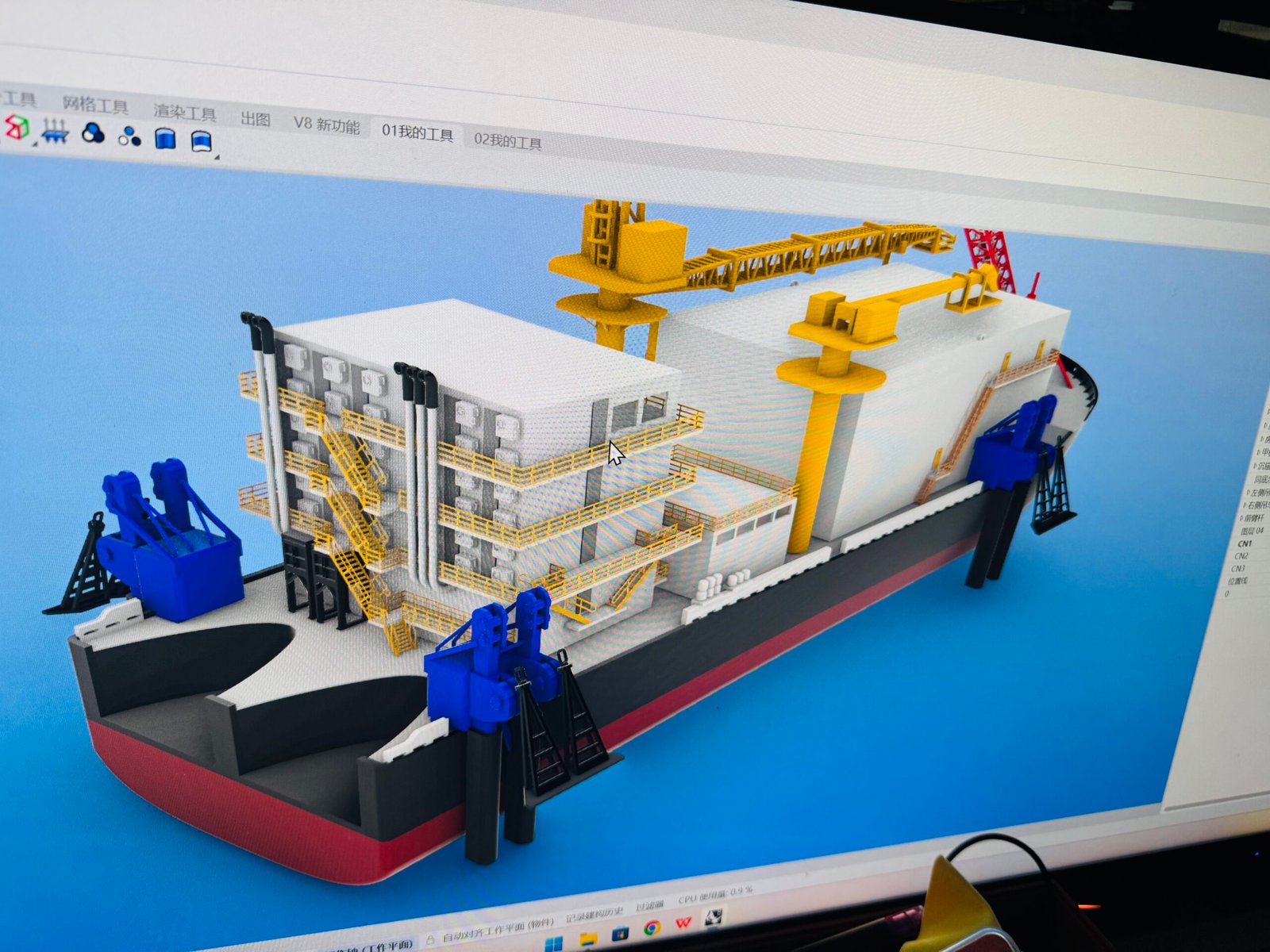
Ship Modeling Knowledge: A Complete Guide to Scale, Accuracy, Materials and Custom Ship Models
Choosing a ship model involves much more than selecting a vessel and a scale. Model size, visible detail, materials, display space, reference drawings, production methods, protective cases and delivery requirements all influence the final result. This guide explains the main principles behind professional ship modeling and helps you plan a custom marine scale model with greater confidence.
1. Ship Model Scale Guide
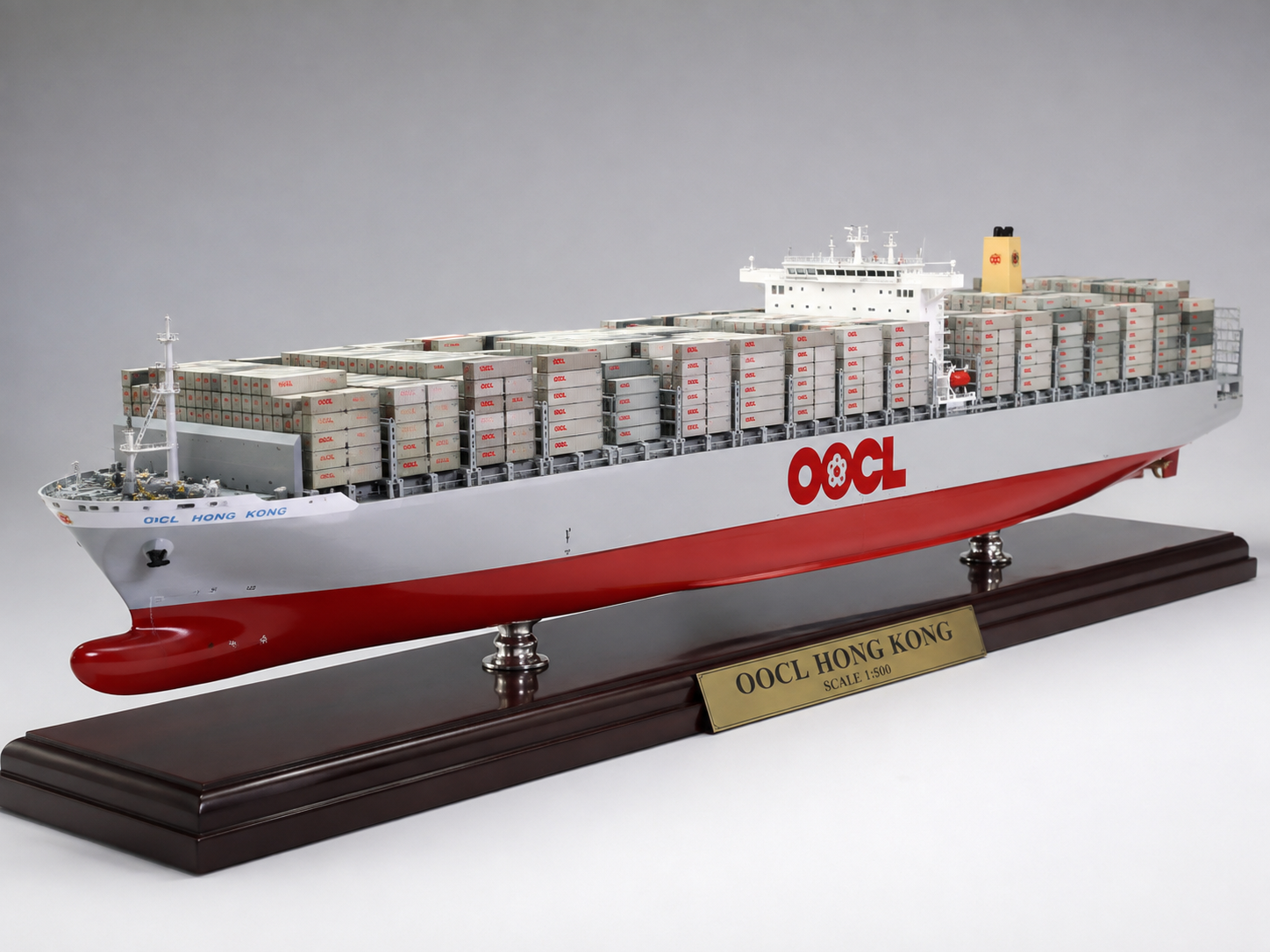
Scale is one of the first decisions in a custom ship model project because it determines the physical size of the model and affects how much detail can be represented. A scale ratio describes the relationship between the real vessel and the model.
For example, a 1:100 ship model represents the real vessel at one hundredth of its corresponding dimensions. A vessel measuring 100 meters in length would therefore have a mathematical model length of approximately 100 centimeters at 1:100 scale.
At 1:200 scale, the same 100-meter vessel would become approximately 50 centimeters long. This simple relationship becomes particularly important when planning large commercial ships, offshore vessels, yachts and museum exhibits.
Scales Model provides a dedicated Guía de escalas para maquetas de barcos with scale calculations, vessel-size examples and practical considerations including display space, detail and packaging.
2. How to Choose the Right Ship Model Scale
There is no single scale that works for every ship model. The appropriate ratio depends on the vessel's dimensions, the required level of visible detail, the available display space and the final purpose of the model.
Eslora del buque
Start with the real overall length of the vessel. A 300-meter container ship and a 30-meter tugboat will produce very different physical models at the same scale.
Datos obligatorios
A larger physical model can provide more practical space for visible railings, ladders, piping, cranes, antennas and other small components.
Espacio de exposición
Measure the available cabinet, table, showroom or exhibition area. Remember that the complete display also includes the base and potentially a protective case.
Distancia de visualización
A boardroom model viewed from close range may require a different presentation strategy from a large museum model viewed several meters away.
Complejidad de los buques
FPSOs, offshore support vessels, research vessels and technical ships can contain dense structures that need careful scale planning.
Transporte y embalaje
Very large models require more space for protective packaging and may need additional delivery planning.
A Practical Scale Selection Checklist
- Confirm the vessel's principal dimensions.
- Measure the available display space.
- Define the level of visible detail required.
- Estimate the finished model length at several possible scales.
- Consider the display base and protective case.
- Review transportation and packaging dimensions.
- Match the scale to the intended application.
For a corporate display, the goal may be to balance strong visual presence with practical office space. For a museum project, interpretation, viewing distance and fine detail may become more important.
3. 1:50 vs 1:100 vs 1:200 vs 1:500
Comparing scales is easier when the same vessel is used as the reference. Imagine a 200-meter vessel.
| Escala | Model Length for 200 m Vessel | Typical Planning Character | Main Consideration |
|---|---|---|---|
| 1:50 | 400 cm | Very large display | Requires substantial display and packaging space |
| 1:100 | 200 cm | Large detailed presentation | Strong visual presence but significant footprint |
| 1:200 | 100 cm | Compact professional display | Useful when size and detail need to be balanced |
| 1:500 | 40 cm | Compact fleet or exhibition model | Smaller physical size changes how fine details are represented |
When a Larger Physical Scale Makes Sense
Larger models can create a strong visual presence and provide more physical space for visible external features. They may be appropriate for smaller vessels, flagship displays, close-viewing environments and projects where presentation size is a priority.
When a Smaller Physical Scale Makes Sense
A smaller physical model can be easier to display, package and transport. This can become important for large vessels, fleet displays, offices with limited space and exhibition projects with multiple models.
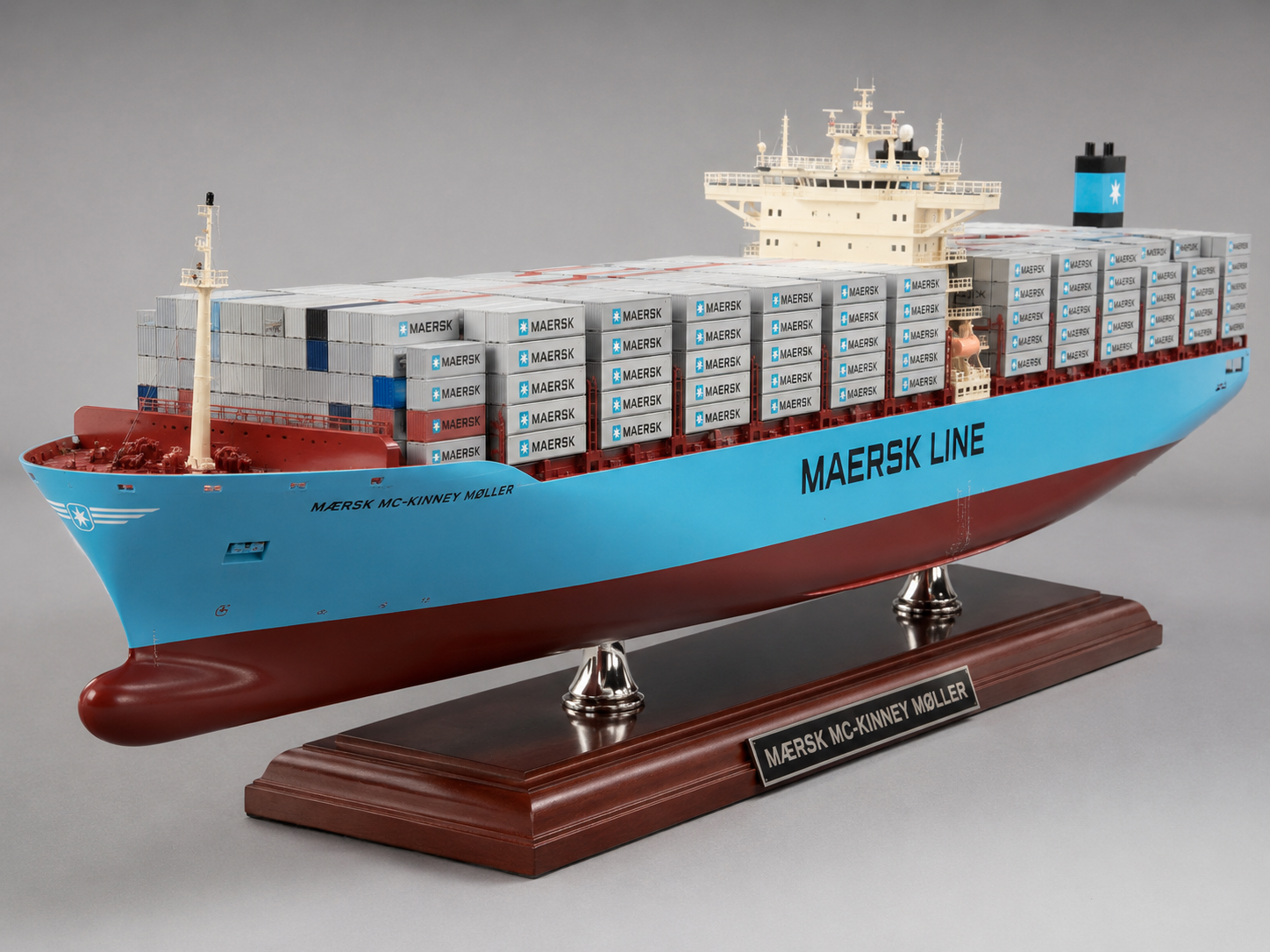
For a more detailed comparison, see the Scales Model Scale Guide.
4. How Ship Model Accuracy Is Measured
Ship model accuracy is not simply about making a model look attractive. Professional accuracy involves the relationship between the model and the actual vessel's dimensions, structure, equipment and visual identity.
1. Hull Proportions
The hull establishes the foundation of the model. Bow profile, stern geometry, beam, waterline, deck height and major proportions should correspond to the selected vessel and scale.
2. Superstructure
Bridge position, accommodation blocks, deckhouses, windows and external structures contribute strongly to vessel recognition.
3. Deck Equipment
Cranes, winches, hatches, lifeboats, anchors, piping, tanks and specialist equipment should be positioned according to the available vessel references.
4. Vessel Identity
A custom model becomes much more recognizable when the vessel name, hull markings, funnel graphics, company colors and other visible identification details correspond to the original vessel.
5. Reference Quality
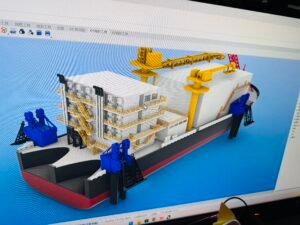
The accuracy achievable in a custom model is closely connected to the quality of the information available. General arrangement drawings, deck plans, photographs, dimensions and CAD information can each contribute different types of information.
Scales Model supports projects based on custom ship model references including drawings, photographs, CAD information, dimensions and branding.
5. What Makes a Museum-Quality Ship Model?
A museum-quality ship model needs to function as more than a decorative object. It should communicate the form, technology, history or identity of the vessel while remaining suitable for professional exhibition.
Historical or Technical Research
Historical drawings, photographs, archives and technical references provide the foundation for recreating a specific vessel or period.
Vessel-Specific Construction
The hull, decks, superstructure and equipment should represent the selected vessel rather than a generic approximation.
Controlled Detail
Fine details should be appropriate to the chosen scale and viewing environment. More detail is not always better if it is inconsistent with the selected scale.
Presentación profesional
A suitable display base, identification plaque and protective display solution can help integrate the model into a museum or exhibition.

For museums and heritage organizations, Scales Model provides a dedicated Museum Ship Model service covering historical vessels, commercial ships, naval subjects and modern marine technology.
6. Ship Model Materials Explained
A professional ship model is rarely made from one material. Different parts of a vessel have different structural, visual and manufacturing requirements.
The hull needs stable geometry and a smooth surface. Railings and antennas require thin, precise components. Bridge windows need transparent materials, while the display base has different requirements again.
Structural Materials
Hulls, superstructures, deckhouses and other major components require materials capable of maintaining consistent geometry and supporting surface finishing.
Fine Detail Materials
Railings, ladders, antennas, piping, cranes and other small components may require different fabrication approaches from the main hull.
Clear Materials
Bridge glazing and windows need appropriate transparent components to create a convincing visual appearance at model scale.
Finishing Materials
Paint, coatings, lettering, graphics and markings complete the external identity of the vessel.
Material selection should therefore be considered together with vessel type, model scale, structural requirements and the desired level of detail.
Learn more in the Ship Model Materials Guide.
7. Acrylic Display Case vs Wooden Display Case
The display case is an important part of a professional ship model because detailed models can contain delicate railings, masts, antennas, rigging, cranes and other small components.
Acrylic Display Case
Acrylic allows the model to remain visible from multiple viewing angles while providing a physical barrier against dust and accidental contact. It is particularly suitable when the model itself is intended to remain the visual focus of a corporate, museum or exhibition display.
- Clear visibility from multiple angles
- Useful for professional indoor displays
- Helps reduce dust accumulation
- Provides a barrier against accidental contact
Wooden Display Case
Wooden presentation systems can create a more traditional or furniture-style appearance and can be integrated with wooden display bases or corporate interiors.
- Traditional presentation appearance
- Can complement wooden display bases
- Suitable for certain heritage or office environments
- Can be planned around larger custom installations
Display protection should also be considered during transportation. Scales Model integrates inspection, protective packaging and delivery planning into the broader custom model workflow.
8. How Long Does a Custom Ship Model Take?
There is no single production time for every custom ship model. The schedule depends on vessel size, scale, complexity, available references, required detail, quantity, finishing requirements and the final presentation format.
A simple model of a relatively small vessel can require a very different production process from a large offshore vessel, FPSO, historic sailing ship or museum project with extensive research and fine detailing.
Revisión del proyecto
Vessel type, dimensions, drawings, photographs, CAD files, scale, quantity and intended application are reviewed.
Scale & Design Planning
Full-size vessel information is converted into the selected model scale and the major structures are planned.
Hull & Main Structure
The hull, decks, superstructure and major geometry establish the physical foundation of the model.
Componentes de alta precisión
Equipment, cranes, railings, ladders, lifeboats, masts, antennas, piping and other vessel-specific details are added.
Painting & Vessel Identity
Colors, vessel names, hull markings, logos and other visual identity elements are completed.
Inspection, Packaging & Delivery
The completed model is reviewed, delicate components are protected, and the model is prepared for final shipment.
See the complete Custom Ship Model Production Process to understand how technical references are developed into a finished physical model.
What Information Should You Prepare for a Custom Ship Model?
You do not necessarily need every type of technical document before contacting a ship model manufacturer. The available information can be reviewed together to determine the most practical modeling approach.
Planos de disposición general
GA drawings can provide important information about hull dimensions, deck levels, superstructure and vessel layout.
CAD or 3D Files
Digital engineering references can support complex geometry, scale conversion and component planning.
Fotografías de buques
Photos from different angles can help identify colors, equipment, markings and external appearance.
Dimensiones principales
Length, beam, height and other known dimensions help establish the correct physical proportions.
Imagen de marca de la empresa
Vessel names, logos, funnel graphics, hull markings and color references help reproduce the identity of the actual vessel.
Display Requirements
Desired scale, finished length, quantity, display location, base, protective case and delivery destination are all useful for planning.
Explore Maquetas de barcos a medida to see the different ways a project can be developed from drawings, photographs or CAD information.
Ship Model Scale Planning for Different Vessel Types
Scale planning also changes according to the type of vessel being reproduced. A container ship, bulk carrier, yacht, tugboat, LNG carrier, FPSO and historic sailing ship each presents different modeling challenges.
Maquetas de buques portacontenedores
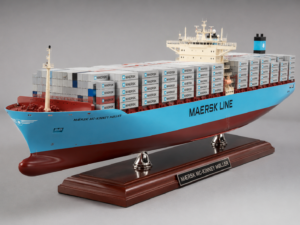
Large container vessels can become very long at 1:100 or larger physical scales. Container arrangement, bridge structure and shipping-line identity also need to be considered. Explore Container Ship Models.
Modelos de buques graneleros
Hatch covers, cargo holds, deck machinery and large hull proportions are important visual features. Explore Bulk Carrier Models.
Modelos de plataformas marinas y FPSO
Dense equipment, piping, cranes, working decks and topside structures can make scale selection especially important. Explore Offshore & FPSO Models.
Modelos de yates
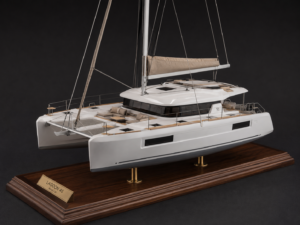
Smaller real-world dimensions can make larger physical scales practical, especially for close-viewing presentation and owner displays. Explore Yacht Models.
Ship Modeling FAQ
What does 1:100 scale mean?
A 1:100 model represents the corresponding dimensions of the full-size vessel at one hundredth of their original size. A 100-meter vessel would have an approximate model length of 100 centimeters.
Is 1:100 bigger than 1:200?
Yes. For the same vessel, a 1:100 model is twice the physical length of a 1:200 model.
What is the best ship model scale?
There is no universal best scale. The practical choice depends on the vessel dimensions, desired model length, visible detail, display space, purpose and delivery requirements.
Can a ship model be made from photographs?
Yes. Photographs from multiple viewpoints, together with basic vessel dimensions and other available references, can provide useful information for an existing vessel.
Can CAD files be used for custom ship models?
Yes. CAD and other digital engineering references can support geometry, scale conversion and detailed component planning.
Can company logos and vessel names be reproduced?
Vessel names, hull lettering, company logos, funnel graphics, colors and other visible identification details can be customized according to suitable supplied references.
¿Qué datos debo enviar para solicitar un presupuesto?
Useful information includes the vessel name and type, available drawings, photographs or CAD files, principal dimensions, desired scale or finished model length, quantity, intended application and delivery destination.
Conclusion: Plan the Ship Model Before You Build It
A professional ship model is the result of several connected decisions. Scale determines physical size. Vessel references determine accuracy. Materials influence how different components can be produced. Display requirements affect the final presentation, while packaging and delivery must protect the finished model.
The most effective approach is therefore to consider the complete project rather than choosing a scale in isolation. Start with the actual vessel, establish the available references, determine the intended display environment, calculate practical model dimensions and then develop the production strategy.
For shipowners, shipyards, engineering companies, offshore organizations, museums, universities and private owners, this process can turn a real vessel into a physical model that communicates its design, identity and purpose.
Need Help Choosing the Right Ship Model Scale?
Send Scales Model your vessel name, principal dimensions, available drawings or photographs, approximate desired model length and display requirements. Our team can review the project information and help determine a practical scale and modeling approach for your custom ship model.
Enviar los datos del buque y solicitar un presupuesto
 Spanish
  English
  Chinese
  German
  French
  Indonesian
  Korean
  Japanese