SCALEMODEL KNOWLEDGE BASE · VESSEL IDENTIFICATION
Ship Prefixes Explained: A Practical Guide to MV, MT, FV, OSV and More
The letters before a ship’s name are more than decoration. Prefixes such as MV, MT, FV and OSV are widely used in maritime references to indicate a vessel’s broad propulsion type or operational role. Understanding them is a useful first step when researching a ship, comparing vessel classes or planning a scale ship model.
What Is a Ship Prefix?
A ship prefix is an abbreviation placed before a vessel’s name in some naming and documentation conventions. It may indicate how a ship is propelled, what it is designed to do, or the historical category to which it belongs. Prefixes have remained useful because they make vessel references shorter and easier to scan in fleet lists, port documents and everyday maritime communication.
Not every vessel uses a prefix, and the same abbreviation may be interpreted differently in different contexts. A prefix is not a substitute for a ship’s official identification. For a precise match, use the vessel name and IMO number where available, then cross-check the operator, builder, dimensions and technical drawings.
Common Ship Abbreviations: A Reference Table
| Prefix | Meaning | What the vessel does | Model research focus |
|---|---|---|---|
| MV | Motor Vessel | General engine-powered vessel | Hull form, bridge, cargo layout and funnel |
| MS | Motor Ship | Engine-powered ship | Confirm vessel-specific arrangement |
| MT | Motor Tanker | Transports liquid cargo | Deck pipelines, manifolds and cargo equipment |
| SS | Screw Steamship | Historically steam-powered ship | Period details, funnels and historic profile |
| FV | Fishing Vessel | Commercial fishing | Fishing gear, winches, gantries and nets |
| MY | Motor Yacht | Engine-powered leisure yacht | Hull lines, windows, decks and exterior finish |
| SY / SV | Sailing Yacht / Sailing Vessel | Primarily sail-powered | Masts, rigging, sails and deck fittings |
| TB | Tugboat | Tows and manoeuvres other vessels | Towing winch, fenders, bollards and wheelhouse |
| OSV | Offshore Supply Vessel | Supports offshore installations | Open working deck, cranes and offshore equipment |
| PSV | Platform Supply Vessel | Delivers supplies to offshore platforms | Deck cargo arrangement and hull proportions |
| AHTS | Anchor Handling Tug Supply Vessel | Handles anchors and supplies offshore units | Large aft deck, towing gear and stern equipment |
| TSHD | Trailing Suction Hopper Dredger | Dredges and transports seabed material | Drag arms, suction pipes, hopper and discharge systems |
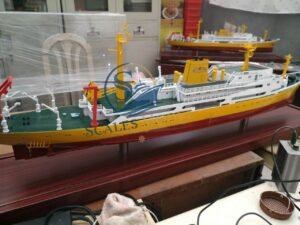
| RV | Research Vessel | Scientific and oceanographic research | Survey equipment, antennae and specialist deck gear |
| FPSO | Floating Production Storage and Offloading | Processes and stores offshore hydrocarbons | Process modules, cranes, flare and mooring details |
| LNGC | LNG Carrier | Transports liquefied natural gas | Cargo containment system and deck piping |
| LPGC | LPG Carrier | Transports liquefied petroleum gas | Tank arrangement and cargo handling equipment |
| ULCV | Ultra Large Container Vessel | Transports large container volumes | Container bay layout, bridge and deck details |
| VLCC | Very Large Crude Carrier | Transports crude oil | Long tanker deck, pipelines and accommodation block |
Abbreviations are practical maritime shorthand, not a globally exhaustive or universally standardised code list. Confirm the expansion used by the vessel’s owner, registry or source document.
How to Recognise Different Vessel Types
Container ships and bulk carriers
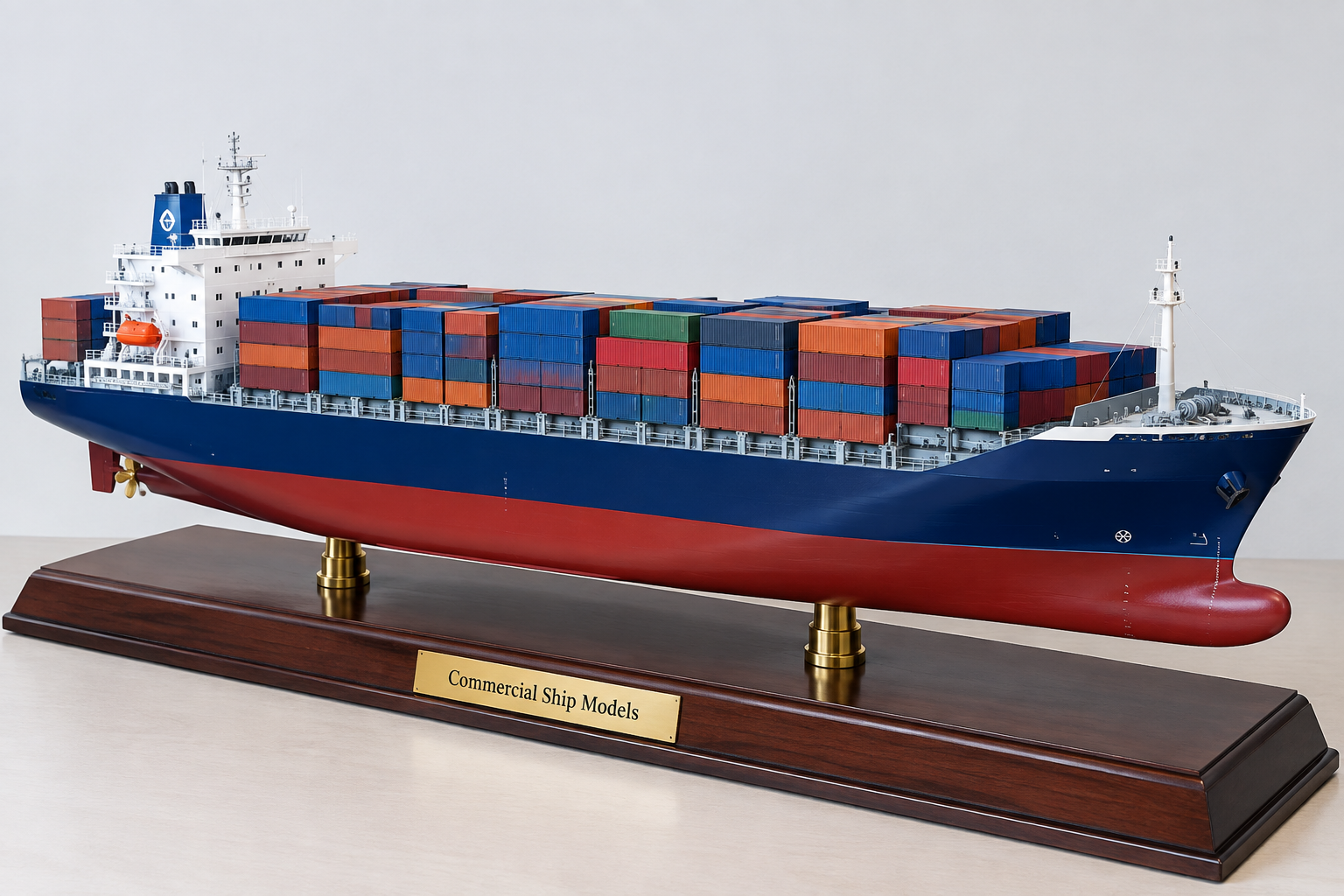
Both may be listed under the broad MV designation, yet their appearance is very different. Container ships have cellular holds and visible container stacks, while bulk carriers are characterised by large hatch covers and a comparatively uncluttered cargo deck. For a container ship model ou bulk carrier model, accurate cargo-deck geometry and the position of the accommodation block are important.
Tankers
An MT prefix points towards a motor tanker, but the cargo type still matters. Crude oil tankers, product tankers and chemical tankers can have different deck arrangements and equipment. A tanker scale model should be based on the exact ship’s plans and photographs, not a generic tanker silhouette.
Offshore support vessels
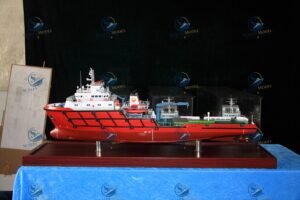
OSVs, PSVs and AHTS vessels are built around demanding offshore tasks. Their working decks, cranes, towing systems, anchor-handling equipment and fender arrangements are defining features. These details make an offshore vessel model particularly dependent on good reference material.
Dredgers
A TSHD is designed to remove material from the seabed and transport it in an onboard hopper. Its drag arms and suction pipes are prominent features, while other dredger types may use cutter heads, spuds, pipelines or specialised lifting equipment. A convincing dredger model must reflect the correct dredging system and deck configuration.
Tugboats and fishing vessels
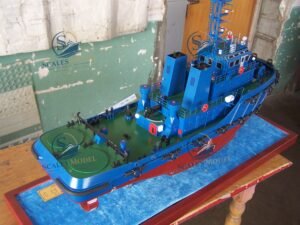
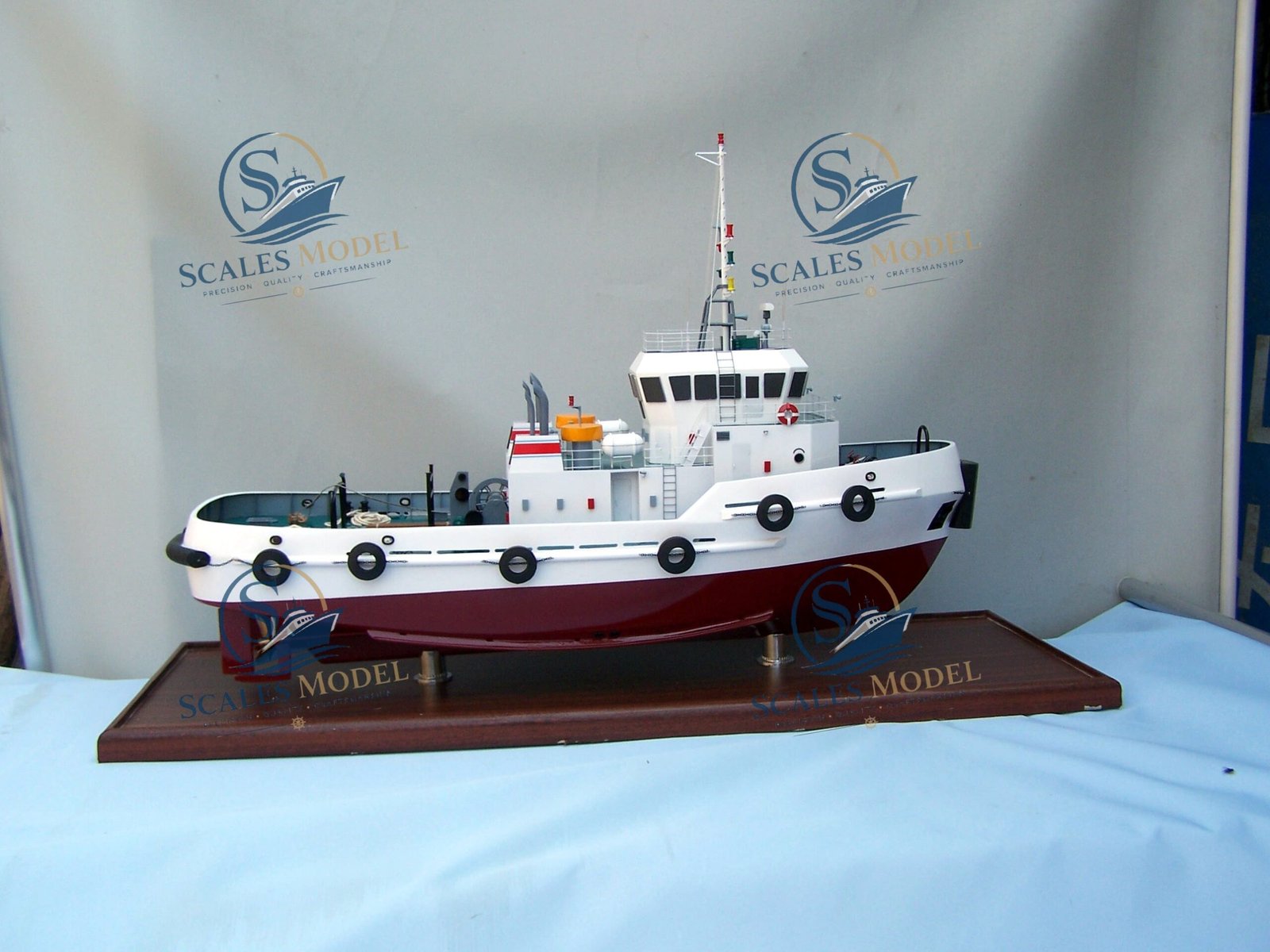
Tugboats are compact but powerful, with towing equipment, heavy fendering and robust deck fittings. Fishing vessels vary by fishing method: stern trawlers, beam trawlers and factory trawlers each have characteristic gear and working arrangements. These elements are often more important to recognition than the prefix itself.
Yachts and sailing vessels
MY generally refers to a motor yacht, while SY and SV are commonly associated with sailing yachts and sailing vessels. Yacht models require close attention to the hull profile, deck levels, glazing, railings, mast, rigging, tender boats and paint scheme. Small changes in window proportions or deck furniture can noticeably affect the finished display model.
From Vessel Identification to Choosing a Scale
Once the exact vessel has been identified, the next decision is model scale. Scale expresses the relationship between the real ship and the miniature. For example, a 100-metre vessel represented at 1:200 scale would have a nominal model length of 0.5 metres, before allowing for any measurement convention differences.
Model length = real vessel length ÷ scale denominator.
| Real vessel length | Échelle | Approximate model length |
|---|---|---|
| 100 m | 1:100 | 100 cm |
| 100 m | 1:200 | 50 cm |
| 200 m | 1:200 | 100 cm |
| 300 m | 1:300 | 100 cm |
| 300 m | 1:500 | 60 cm |
These are simplified examples using overall length. Confirm whether the source dimension is length overall (LOA), length between perpendiculars or another measurement before finalising a scale. The available display space, level of detail, budget and transport requirements should also influence the choice.
What Reference Material Is Needed for an Accurate Scale Ship Model?
A prefix helps classify the vessel, but a specific replica needs vessel-specific information. A strong reference package may include:
- Vessel identity: full name, IMO number, owner or operator, shipyard and year built.
- Plan d'ensemble (GA) : deck layout, superstructure and major equipment locations.
- Profile and hull drawings: side elevation, bow and stern views, and hull lines when available.
- Photographs: port and starboard sides, bow, stern, aerial or elevated views, and close-ups of distinctive equipment.
- Appearance details: hull colours, waterline, funnel logo, company marks, lettering and current vessel configuration.
- Exigences en matière d'affichage : target scale or length, base style, nameplate, acrylic case and transport packaging.
If complete drawings are unavailable, clear photographs from multiple angles can still provide a useful starting point. The more complete and current the references, the easier it is to reproduce the individual vessel rather than a generic ship of the same category.
Why Vessel-Specific Details Matter More Than the Prefix
Two ships may both be called MV but differ in dimensions, hull shape, bridge position, deck equipment and company markings. Likewise, two offshore vessels with similar duties may have different stern arrangements and crane configurations. A high-quality custom scale ship model should capture those differences.
À ScalesModel, the model planning process starts with the vessel identity, available drawings and reference photographs. The scale and display format can then be considered alongside the level of detail required. This approach is suitable for office display models, corporate gifts and presentation pieces.
Planning a Custom Scale Ship Model?
Start with the vessel name, IMO number (if available), approximate real length and any GA drawings or photographs. Our team can help assess the references and discuss a practical model scale.
Foire aux questions
What does MV stand for in a ship’s name?
MV usually stands for Motor Vessel, a vessel powered by an engine.
What is the meaning of FV?
FV commonly means Fishing Vessel, a ship used for catching fish or other marine organisms.
What is the difference between OSV and PSV?
OSV is a broad term for Offshore Supply Vessel. PSV, or Platform Supply Vessel, is a more specific offshore support category focused on supplying platforms.
What does TSHD stand for?
TSHD means Trailing Suction Hopper Dredger. It uses trailing suction equipment to collect seabed material and stores the dredged material in a hopper.
How do I calculate the length of a ship model?
Divide the real vessel length by the scale denominator. For example, 200 metres at 1:200 gives a nominal model length of 1 metre. Make sure you use the correct real-vessel measurement.
Can a ship model be made without GA drawings?
Often, yes. A complete set of clear photographs showing all sides and important details can help with reconstruction. However, the design stage may take longer and some hidden or obstructed features may need confirmation.
Further reading: Ship Prefix Meanings: MV, MT, SS, FV and Other Vessel Designations. This article is an original educational adaptation and does not reproduce the source article.
 French
 English
 Chinese
 Spanish
 German
 Indonesian
 Korean
 Japanese