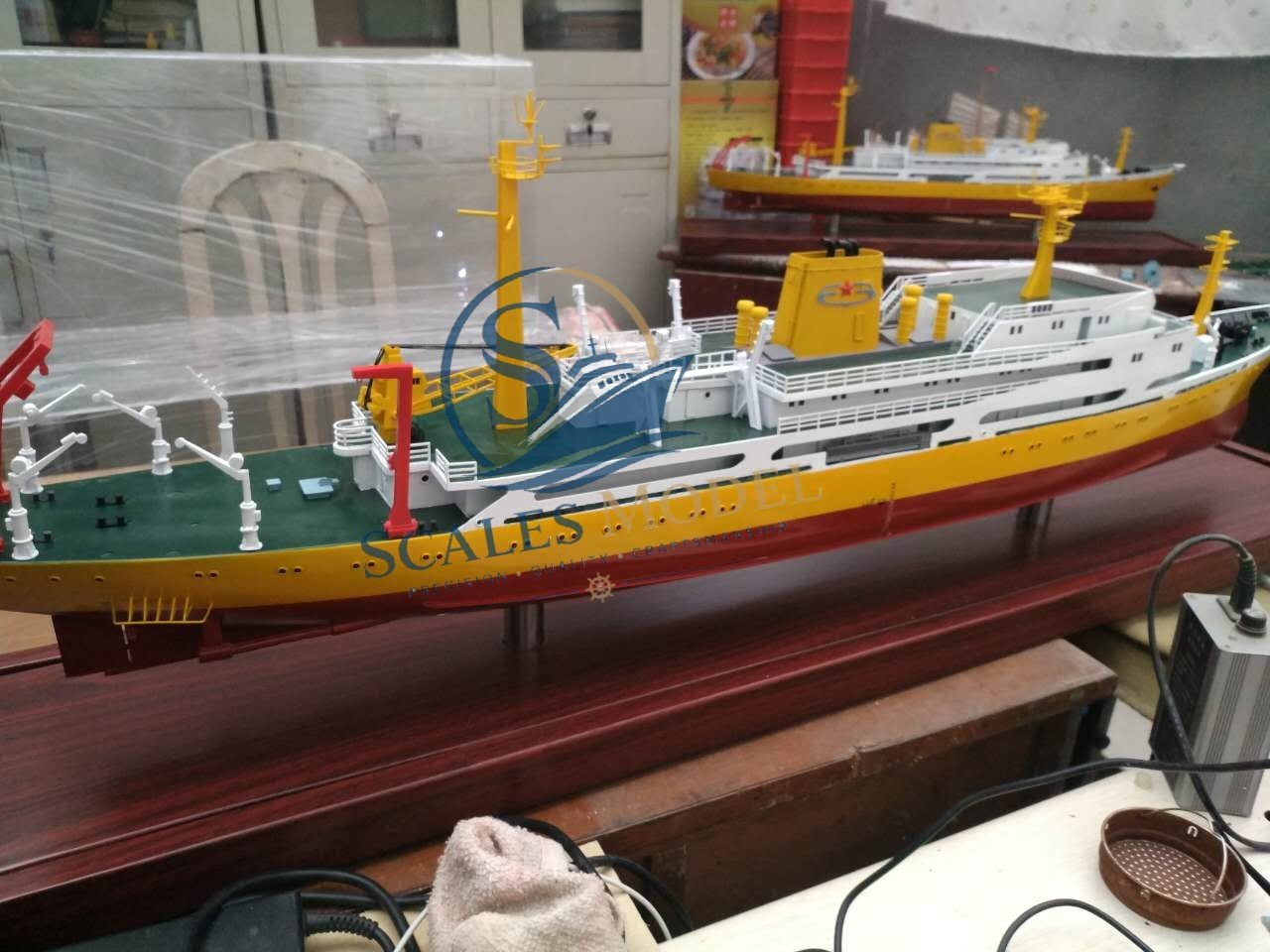
One of the most common questions customers ask before ordering a custom ship model is, “What drawings do I need to provide?” The answer depends on the level of detail required, but supplying accurate technical information is the best way to ensure your model faithfully represents the original vessel.
À Modèle à l'échelle, we manufacture custom ship models based on engineering documentation, CAD files, and reference photographs. Understanding the different types of drawings will help make your project smoother and more efficient.
Why Drawings Matter
Ship model drawings serve as the foundation for every custom project. They provide the dimensions, structural layout, and technical details required for engineers and craftsmen to reproduce the vessel accurately.
The more complete the documentation, the more realistic and precise the finished model will be.
Plans GA
General Arrangement (GA) drawings are the most important documents for ship model production. They illustrate the vessel’s overall layout, including decks, accommodation areas, machinery locations, and structural arrangements.
GA drawings provide the primary reference for determining the proportions and positioning of major components.
Hull Lines Plan
Hull line drawings define the vessel’s shape and profile. These drawings allow craftsmen to accurately reproduce the hull’s curves, bow, stern, and underwater form.
Without hull lines, achieving the correct overall appearance becomes significantly more challenging.
Deck Plan
Deck plans show the arrangement of equipment, walkways, cranes, hatches, lifeboats, and other deck structures.
These drawings ensure that every visible component is positioned correctly according to the original vessel.
Side Elevation
Side elevation drawings provide detailed views of the ship’s external profile. They help determine the height and placement of the bridge, funnels, masts, cranes, and other vertical structures.
These drawings are essential for maintaining accurate proportions.
Cross Sections
Cross-sectional drawings illustrate the vessel’s internal structure at various locations. While not always required, they are particularly useful for highly detailed museum-quality models or complex offshore platforms.
Fichiers CAO
Modern shipyards often supply CAD files in formats such as DWG or DXF. These digital files enable engineers to extract precise measurements and streamline the manufacturing process.
Using CAD data also reduces the likelihood of dimensional errors.
STEP Files
STEP files provide complete three-dimensional engineering models. These files are especially valuable for projects involving complex offshore equipment or intricate structural components.
They allow manufacturers to recreate highly accurate parts using CNC machining or 3D printing.
PDF Files
If original CAD files are unavailable, PDF drawings can still provide valuable reference information. High-resolution PDFs containing GA plans, elevations, and deck layouts are often sufficient for many custom projects.
Can Photos Replace Drawings?
Yes, in many cases. If technical drawings are unavailable, experienced model makers can recreate a vessel using high-quality photographs from multiple angles, vessel specifications, and publicly available information.
For the best results, provide images showing the front, rear, both sides, and top views whenever possible.
Tips Before Sending Files
Before submitting your project, consider the following recommendations:
- Provide the latest version of your drawings.
- Include multiple file formats whenever available.
- Supply high-resolution photographs.
- Specify the desired scale.
- Identify any modifications from the original vessel.
- Include company logos and paint references if required.
These steps help reduce production time and improve model accuracy.
Conclusion
Accurate ship model drawings are the foundation of every successful custom model. Whether you provide GA drawings, CAD files, STEP files, or detailed photographs, complete project information allows our team to produce a model that captures every important feature of your vessel.
À Modèle à l'échelle, we carefully review every file before production begins, ensuring your custom ship model reflects the highest standards of engineering accuracy and craftsmanship.
Foire aux questions
Which drawing is the most important?
GA drawings are usually the most essential because they show the vessel’s complete layout.
Can you work with PDF drawings?
Yes. High-quality PDF drawings are suitable for many custom projects.
Do I need to provide CAD files?
CAD files are helpful but not mandatory. We can also work from PDF drawings and photographs.
Can you build a model using photos only?
Yes. If technical drawings are unavailable, we can often recreate the vessel using detailed reference images.
What file formats do you accept?
We accept DWG, DXF, STEP, PDF, JPG, PNG, and other common engineering file formats.
 French
  English
  Chinese
  Spanish
  German
  Indonesian
  Korean
  Japanese