Turn the Vessels That Keep Ports Moving Into Detailed Physical Models
Some of the most interesting vessels in the maritime industry are not the largest.
Tugboats, pilot boats, patrol vessels, offshore support craft and other workboats often concentrate an extraordinary amount of equipment into a relatively compact hull.
Winches, towing equipment, fenders, cranes, working decks, radar masts, antennas and specialized structures give each vessel a strong individual identity.
That makes the workboat sector particularly suitable for detailed physical scale models.
For companies preparing for International WorkBoat Show, Scales Model’s Schlepper-Modelle and broader Modelle von Handelsschiffen structure provides a direct route for vessel-specific display projects. Scales Model’s main custom workflow supports drawings, photographs and CAD references.
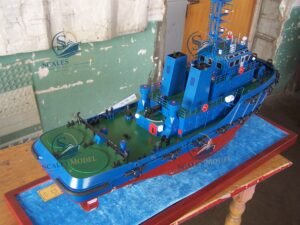
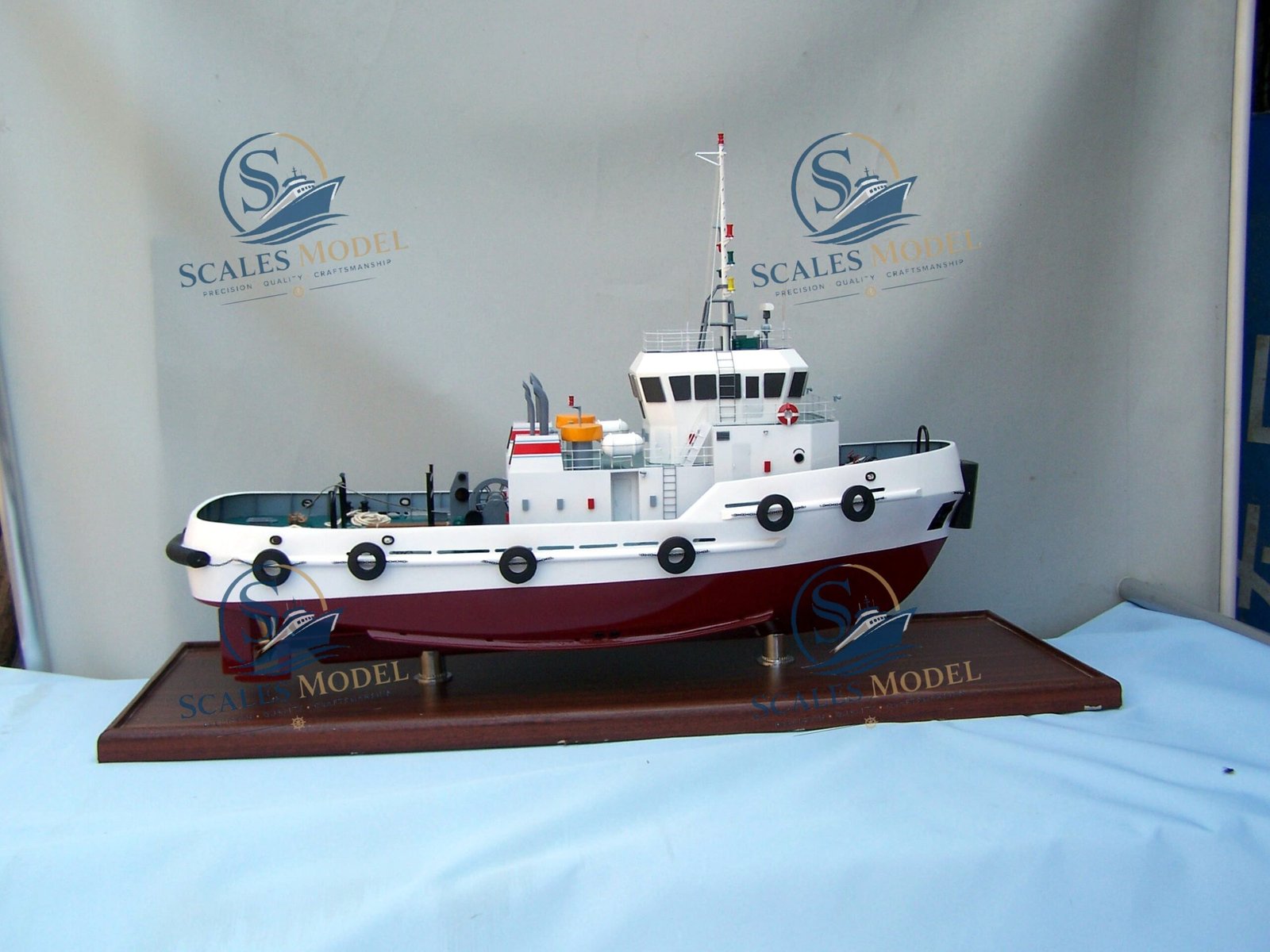
Tugboat Models for Towage Companies
A towage company may operate several very different tug classes.
Some are designed for harbor-assist work. Others are larger escort or offshore towing vessels. Their hull forms, deck layouts and fender arrangements may be completely different.
A custom model should preserve those differences.
That can include the actual tug’s wheelhouse profile, towing winch, fairleads, fenders, radar mast, company colors and vessel name.
The result is not simply “a tugboat model.”
It is a model of that tugboat.
Fleet Models for Operators
For an operator, one model can represent a flagship vessel.
Several models can represent the entire fleet.
A coordinated collection may be used in headquarters, customer meeting rooms or port-operations centers.
The models can also help communicate fleet development.
A visitor immediately sees the different vessel sizes and configurations instead of reading a fleet list.
This overlaps naturally with Scales Model’s dedicated Reeder page.
Workboat Models for Shipyards
A workboat shipyard may use physical models differently.
The goal is often to present newbuilding capability.
A completed tug or support vessel can become a permanent Shipyard Model used for customer meetings, exhibitions or future tender discussions.
If a new vessel is still in the design stage, suitable technical information may also support a Prototype Model.
The builder can begin marketing the design before the full-size vessel is complete.
Port and Patrol Vessel Models
The wider workboat category includes many specialized port vessels.
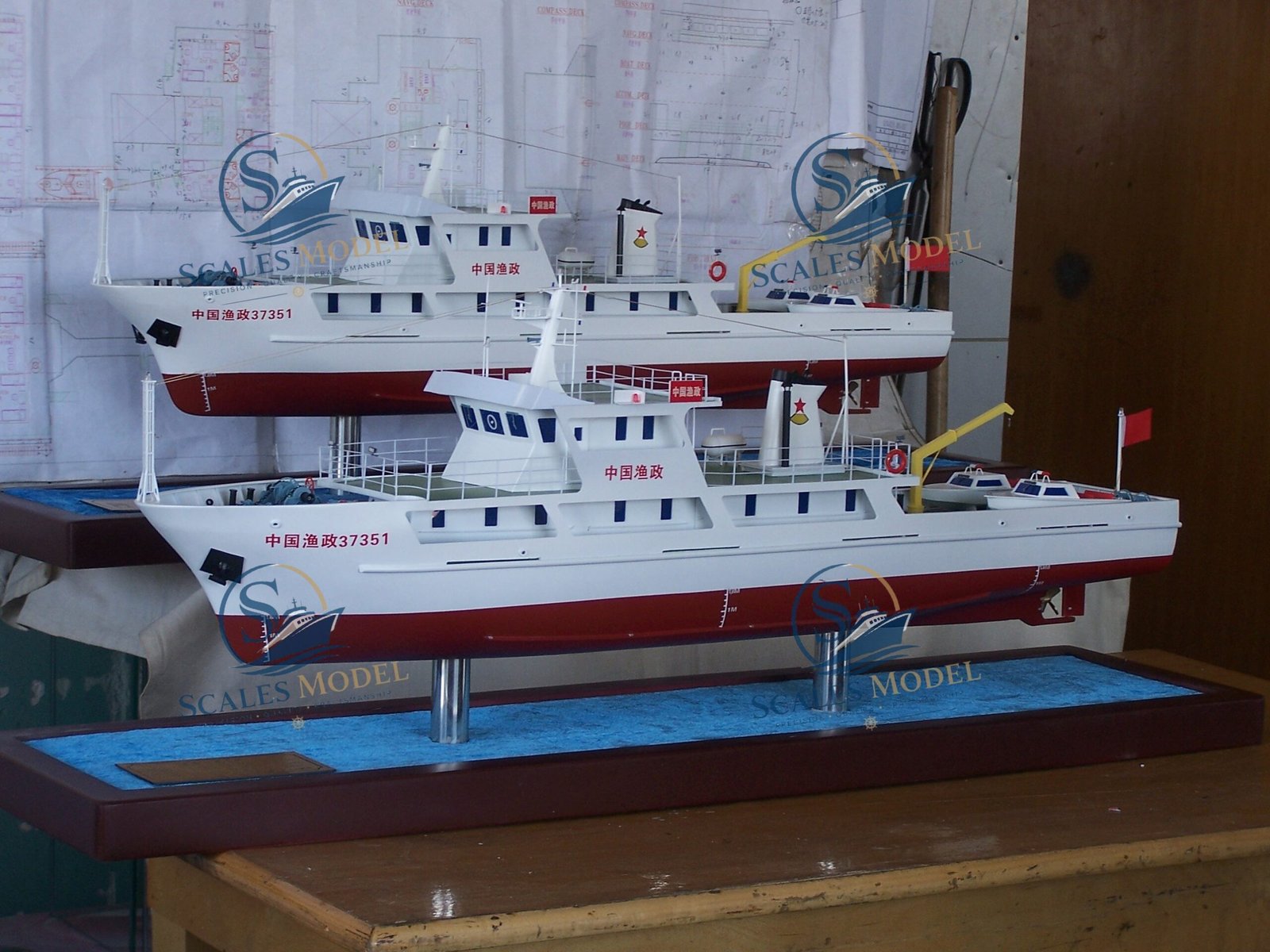
Marine Ship Models’ Dongying Port Patrol Ship Model demonstrates how the external identity of a compact patrol vessel can be captured in physical scale.
The Marine Ship Models site also maintains a broader Barge, Trawlers & Tug Boats category containing workboat-related model material.
These resources complement Scales Model’s dedicated Tugboat Models landing page.
Why Workboats Can Make Impressive Models
A smaller real vessel does not automatically mean a less interesting model.
In fact, compact vessels can provide opportunities for strong close-range detail.
A model of a tug may allow the viewer to appreciate:
wheelhouse windows, deck machinery, towing equipment, railings, mast structures and operator branding at a scale where each feature remains easy to see.
This can make a workboat model particularly effective at an exhibition.
Make the Model the Center of the Stand
At International WorkBoat Show, many exhibitors sell services or equipment that are difficult to communicate from a distance.
A physical vessel model gives the visitor something recognizable.
An operator can show a real vessel from its fleet.
A shipyard can present a newbuilding design.
A supplier can explain equipment in the context of an actual working vessel.
Scales Model’s Ausstellungsmodelle can support this type of B2B trade-show application.
Offshore Support Vessels
The WorkBoat sector also overlaps strongly with offshore energy.
For companies operating larger offshore service vessels, Scales Model’s Offshore- und FPSO-Modelle and Offshore-Gesellschaften pages provide additional internal pathways.
A fleet presentation might even combine support vessels with a larger offshore project model.
That can show how the individual vessels fit into the wider marine operation.
Build From the Information Available
Workboats are often documented extensively by their builders and operators.
Possible reference material includes:
GA drawings, principal dimensions, vessel photographs, equipment drawings, color references and CAD files.
Scales Model’s Aus Zeichnungen bauen and Aus Fotos erstellen services allow the project to start with different combinations of information.
A completed model can then be refined around the individual vessel identity.
Company Branding Is Essential
Towage and workboat operators often have highly recognizable fleet colors.
That makes branding particularly important.
The model may include the vessel name, hull color, operator markings and suitable corporate identity.
A professional display base can carry additional project information.
This turns the model into a recognizable fleet asset rather than an anonymous miniature vessel.
International Delivery and Protection
Workboat models may contain many fragile projecting components, particularly around masts, antennas and railings.
Scales Model’s Qualitätsprüfung, Verpackung and Weltweiter Versand structure therefore matters for exhibition projects.
If the model must arrive at New Orleans or another international destination before a fixed event date, the shipping requirement should be considered early in the project.
Let the Vessel Tell the Story
Workboats are working assets.
Their appearance reflects what they do.
That makes them ideal candidates for physical modeling.
A tugboat’s fendering and winch arrangement, a patrol vessel’s bridge and mast, or an offshore support vessel’s working deck can immediately communicate the purpose of the ship.
For towage operators, workboat shipyards, ports and offshore companies preparing an exhibition, vessel delivery or permanent fleet display, Scales Model can review the available drawings, photos and CAD information to develop a customized physical model.
 German
  English
  Chinese
  Spanish
  French
  Indonesian
  Korean
  Japanese